
POh 8 (1704) – Garhi Chamkaur
ਬਸ ਏਕ ਹਿੰਦ ਮੇਂ ਤੀਰਥ ਹੈ ਯਾਤਰਾ ਕੇ ਲਿਏ । ਕਟਾਏ ਬਾਪ ਨੇ ਬੇਟੇ ਜਹਾਂ ਖ਼ੁਦਾ ਕੇ ਲਿਏ ।
The Battle of Garhi Chamkaur Sahib – 8 Poh 1704
A Saga of Faith, Blood, and Unyielding Spirit
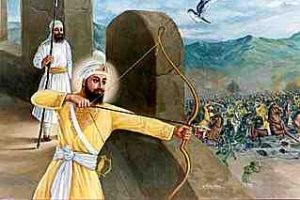
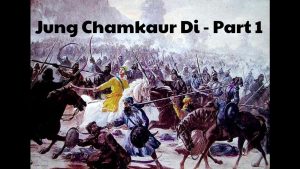
The Battle of Garhi Chamkaur Sahib, fought on 8 Poh 1704 (December 1704), is not merely an episode of war in Sikh history—it is a heart-rending testament of supreme sacrifice, where faith stood unshaken amid loss, hunger, separation, and certain death. Here, within the walls of a small mud-built Garhi at Chamkaur, Sri Guru Gobind Singh Ji witnessed the martyrdom of his beloved sons and his devoted Sikhs, yet remained steadfast in divine resolve.
After months of hardship and betrayal following the siege of Anandpur Sahib, Guru Gobind Singh Ji left the city trusting solemn oaths sworn on the Qur’an and the cow by Mughal officers and hill rajas—oaths that were treacherously broken. In the chaos that followed, the Guru’s family was torn apart in the freezing winter night, an agony remembered as Parivaar Vichhora. With only forty Sikhs, the Guru reached Chamkaur and took shelter in a modest fortified house belonging to two brothers Chaudhry Roop Chand and Rai Jagat Singh, Loyal followers of Guru Gobing Singh Ji.
By dawn on 8 Poh, the surrounding fields thundered with the arrival of an enormous Mughal force, numbering in the tens of thousands. The Garhi was encircled. Inside stood Guru Gobind Singh Ji, his two elder sons—Sahibzada Ajit Singh Ji (18) and Sahibzada Jujhar Singh Ji (14)—and a small band of exhausted but spiritually awakened Khalsa. There was no fear, no despair—only calm acceptance of the Divine Will.
The battle began with fierce volleys of arrows and gunfire. One by one, Sikhs bowed before the Guru, seeking permission to step out of the Garhi. Each Sikh knew that once he crossed the gate, return was impossible. Yet their faces glowed with Chardi Kala.
Then came the moment that pierced history forever:
Sahibzada Ajit Singh Ji, the eldest son of the Guru, stood before his father, folded his hands, and humbly sought permission to go into battle. Guru Gobind Singh Ji embraced his son, bestowed his blessings, and watched as the young commander led a small jatha into the battlefield. With sword in hand and Waheguru on his lips, Sahibzada Ajit Singh Ji fought like a seasoned warrior, cutting through enemy ranks before attaining Shaheedi.
Soon after, the younger son, Sahibzada Jujhar Singh Ji, stepped forward. Barely fourteen, yet filled with divine courage, he too asked for his father’s command. Guru Gobind Singh Ji, though his heart bore unimaginable pain, granted permission in obedience to the Khalsa ideal. Sahibzada Jujhar Singh Ji charged into battle, fearless and radiant, and embraced martyrdom beside the warriors of the Khalsa. The father remained firm, offering his sons to the Panth and to humanity.
The Jakara at Garhi Chamkaur (By Guru Gobind Singh Ji) – a Declaration of Eternity:
**The Jakara That Shook the Heavens**
Baba Ajit Singh Ji, the firstborn of the Guru — only eighteen, lion-hearted and radiant — had ridden out into certain martyrdom, his saffron robe disappearing into a storm of Mughal steel.
Moments later followed Baba Jujhar Singh Ji, only fourteen, a child in years but a warrior in spirit, stepping into battle with the serenity of a saint and the roar of a tiger.
The battlefield fell into a stunned silence.
Even the enemy’s swords seemed to hesitate, unable to comprehend what they had witnessed:
a father sending his sons to death — not in despair, but in divine command.
Inside the battered Garhi stood Sri Guru Gobind Singh Ji.
A father who had just offered both his living heartbeats to the Almighty.
No tear fell from his eyes — not because there was no pain,
but because the pain was too sacred for the earth to hold.
The surviving Sikhs stood frozen.
Their breaths were shallow.
Their souls trembled.
The world expected a cry of grief.
Instead…
The Guru rose.
Tall.
Radiant.
Unshaken.
The broken walls echoed with his voice as he raised his sword to the heavens and thundered:
“Jo Bole So Nihal… Sat Sri Akaal!”
It was not a slogan.
It was not a cheer.
It was a cosmic proclamation because it was not spoken only for human ears — it was a declaration made to the entire universe.
It was the Guru’s answer to death itself.
The heavens leaned closer.
That Jakara was not born of victory —
it was born of absolute surrender to Truth.
Through it, the Guru proclaimed to the universe:
My sons are not lost — they are crowned.
My blood is not spilled — it is sanctified.
My home is not broken — it is immortal.
Jakara crossed the walls of Chamkaur, crossed history itself, and still echoes in every Sikh heart that stands for faith, courage, and righteousness.
It declared for all ages:
“The Khalsa does not mourn martyrdom.
The Khalsa is crowned by it.”
The Khalsa does not mourn death — the Khalsa commands destiny.
When the Guru Obeyed the Khalsa — The Departure from Garhi Chamkaur:
The 8 Poh night at Garhi Chamkaur had grown heavy with silence.
Outside the shattered walls lay the bodies of martyrs —
the Guru’s beloved sons, Sahibzada Ajit Singh Ji and Sahibzada Jujhar Singh Ji,
and the devoted Sikhs who had walked into death with Waheguru on their lips.
Inside the Garhi remained only five Sikhs with Sri Guru Gobind Singh Ji.
The enemy encircled the fortress.
Torches flickered in the distance.
Every breath carried the certainty that dawn would bring the end.
It was then that the five Sikhs gathered before the Guru.
Their eyes were wet, their bodies wounded, yet their spirits stood unshaken.
With folded hands and voices firm, they spoke words never spoken before in history:
“O True Guru, the Khalsa commands you
you must leave this Garhi.”
For a moment, the world seemed to stop.
Before them stood the Tenth Master,
the father of martyrs,
the light of the Khalsa —
and yet he did not object.
He did not command.
He did not refuse.
Instead, Guru Gobind Singh Ji bowed.
He placed his plume at the feet of the Khalsa and said:
“The Khalsa is my Guru, and I am the Khalsa.”
In that moment, sovereignty passed from one body
into the eternal institution of the Panth.
With a heavy heart yet unbreakable resolve,
the Guru prepared to leave the Garhi —
not as a fugitive,
but as the living destiny of the Khalsa.
Before departing, he embraced each of the five Sikhs.
They would remain behind to attain martyrdom,
so that the Guru might carry forward the flame of righteousness.
Then, under the cloak of darkness,
Guru Gobind Singh Ji slipped through the enemy lines,
while the five Sikhs inside the Garhi prepared themselves for Shaheedi.
That night, tyranny believed it had won.
But history records otherwise.
For when the Guru obeyed the Khalsa at Chamkaur,
he planted the foundation of a nation that no empire could ever conquer.
The Battle of Garhi Chamkaur Sahib was not a defeat—it was a spiritual triumph. On 8 Poh 1704, the Khalsa proved that righteousness does not count numbers, that faith does not bow to tyranny, and that a father can offer his sons for the freedom of humanity.
Garhi Chamkaur Sahib today echoes with silent cries of valor and devotion, reminding the world that true victory is achieved through sacrifice, truth, and unwavering faith in Waheguru.
Waheguru Ji Ka Khalsa
Waheguru Ji Ki Fateh.